

God’s people are not constrained by the boundaries of countries nor our own expectations for our lives. He has placed His people all over the world to be His witnesses of His Kingdom and to share the Good News of the Gospel.
But in dark or fearful times, it is sometimes easy to withdraw inside those human-created boundaries and not look beyond. People can reason that the weight is too heavy right where they are and so it seems easy to withdraw or remain. But God has such greater plans! He uses hard times to move us and open our eyes to greater purposes, as He has in Ukraine. Church doors have opened wide in the midst of great fear and suffering! People who might not have ever walked through church doors have taken that step inside because of their difficult circumstances. People have been saved and baptized! Churches have grown and have begun thriving as many new believers step up to serve the Lord. And missionaries are sent out! Not just within the country, but beyond those boundaries!
The life and experiences of those living through war today are only preparation of what is to come. These people who have lived through some of the darkest of times are the ones who shine the brightest as they share their stories with lost and hurting people in other dark places. God’s plan is to take us beyond our comfort zone and even self-imposed boundaries to be His ambassadors throughout the world.
Missions Is Not Over: A Ukrainian Vision Beyond the War
Ukraine remains in the middle of a full-scale invasion. Sirens still interrupt daily life, families still grieve, and churches continue serving exhausted people. Yet in the shadow of war, one message is still clear: missions is not over.
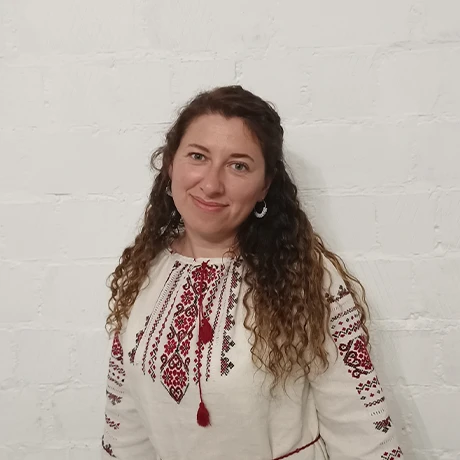
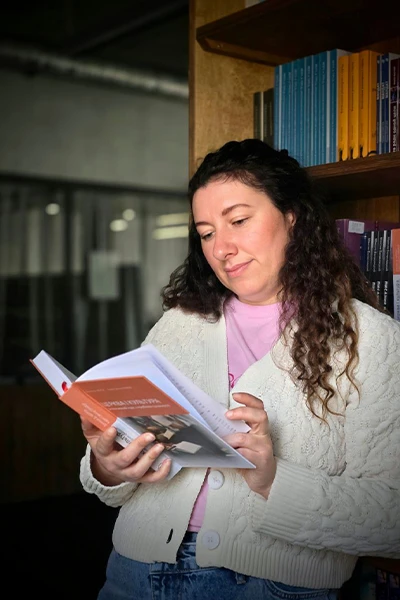
Liza serves in the Baptist Union missions department, helping churches in Ukraine keep their eyes beyond their own borders. She was raised in a Christian home where faith was not only personal, but outward-looking. Her parents often spoke and prayed about Kazakhstan, and that love for another nation became part of her spiritual foundation. “They had warm feelings toward Kazakhstan,” she says, and their respect and love for other cultures shaped her from childhood. She also grew up reading missionary biographies, and says that early on, she began to dream of becoming a missionary herself.
That calling later became real. Before the full-scale invasion, Liza served in Kazakhstan where she learned that intercultural ministry begins with humility and listening. She intentionally studied the nation’s history and roots, saying that understanding a country’s story is an important part of missionary formation. When war forced her to relocate to Poland, she found herself once again learning a new culture, history, and way of life. “I realized I loved cultures,” she explains, “trying to understand people better.”
For Liza, war has not changed the meaning of Christ’s command. “The Great Commission is for all times,” she says. “There is no time when it is not relevant—until Jesus returns.” She points out that Jesus and His disciples did not minister in comfort, but under occupation and conflict, and that the early church did not wait for perfect conditions before going. “The disciples didn’t wait until all of Israel became born-again believers,” she notes. “They went beyond their borders.”
That is why she believes Ukrainian churches must continue thinking globally, even while the nation bleeds. For her, a global mindset is not only about leaving the country, but about recognizing mission opportunities already forming inside Ukraine. She notes that Ukraine may soon receive labor workers from other nations, and the church must be ready to reach them for Christ in their language and culture. “That is a global mindset,” she says. At the same time, she reminds churches that Ukrainians themselves are scattered across the world. The question is how to help believers stop seeing themselves only as victims, and instead become active witnesses wherever they live.
Liza has seen this happening firsthand. She speaks of friends who were missionaries before the war and remain missionaries today, as well as refugees who have become missionaries outside Ukraine. She also served in Poland during the first years of the invasion, ministering to displaced Ukrainians. She believes the war opened unexpected doors: documents became easier, people were more open due to pain, and many began searching for churches for help, counseling, and hope. In some places, she says, Protestant churches became more open and more willing to work together.
Because of this, Liza believes Ukraine can still be a sending nation. “Yes, I see that our country can send missionaries,” she says, but she emphasizes that it requires commitment from local churches. Churches must not only send workers, but also support them through prayer, finances, and long-term care. She highlights the need for missionary “member care”—spiritual and emotional support that helps missionaries endure and remain healthy.
One of her most striking observations is how suffering itself has reshaped Ukrainian believers for missions. “When we suffer, we analyze a lot more,” she says. “Our values change.” She admits that before, it was easy to judge other nations from a distance, but pain has given her a new compassion. Suffering has taught her that people do not always choose their circumstances, and that God often leads His people through danger in ways they could never imagine.
Looking ahead, Liza dreams that Ukraine will help reshape the culture of missions in the next 10 to 20 years. She hopes churches will become more intentional about raising, sending, and caring for missionaries, and that Ukraine will develop resources—spiritual and psychological—shaped by its own experience of trauma and endurance.
Ukraine is still at war, and the needs inside the country remain enormous. But Liza’s message is clear: the church cannot shrink its vision to survival alone. When the church prays for the nations, she says, it does not close in on itself—it stays open, ready to welcome others, and ready to go.
The Great Commission was never meant for peaceful times only. It was given for all times—until Christ returns. And even now, from a wounded nation, part of the Church in Ukraine is still lifting its eyes beyond the battlefield, toward the nations Jesus died to save.
Related Stories